

Pilanesberg vs. Etosha: Which Park is Right for Your Short Trip?
If you’re planning a short safari-break in Africa, choosing between Pilanesberg National Park (South Africa) and Etosha National Park (Namibia) can feel like a big decision. Both are amazing. Yet each offers a different kind of experience. In this article we’ll compare “Pilanesberg vs. Etosha” across key aspects — to help you decide which park fits your time, budget and style. We’ll use simple language, include transitional phrases and keep things clear.
Quick Overview: Pilanesberg vs. Etosha
Pilanesberg National Park

Here are the key facts about Pilanesberg. It is located in the North West Province of South Africa.
-
Size: about 550 km² (some sources say around 580 km²) in the Bojanala region.
-
It was formed inside an ancient volcanic crater.
-
It has the “Big Five” (lion, elephant, rhino, leopard, buffalo) and many other species.
-
Malaria-free.
-
Very accessible from Johannesburg and Pretoria (2 hours approx).
-
For a short trip, it is convenient.
Etosha National Park

And here are the key facts about Etosha: It is situated in north-western Namibia.
-
Size: about 22,000 km² (one of the largest parks in Africa) covering vast space.
-
Centrepiece: a huge salt pan (“great white place”) which is visible from space.
-
Rich wildlife including many mammals, birds, and unique vegetation zones.
-
Also malaria-free (depending on zones) and accessible via Namibia roads.
-
For a short trip you’ll need to plan more carefully because of the size and travel distance.
Travel Time & Getting There
When you only have a few days, travel time matters a lot. Let’s compare how easy each park is to reach and how much time you’ll spend on travel vs. safari.
Getting to Pilanesberg
Since Pilanesberg is quite close to Gauteng (Johannesburg/Pretoria):
-
You can leave Johannesburg or Pretoria in the morning and be inside the park by mid-morning or early afternoon.
-
Because travel time is short, more of your day can be spent on game drives, relaxation, or rest.
-
This makes Pilanesberg a strong choice if you only have 1-2 nights, or a weekend trip.
Getting to Etosha
By contrast, getting to Etosha generally takes longer:
-
If you’re coming from Windhoek (capital of Namibia) you’ll spend several hours on the road before you even arrive at the park.
-
Once inside the park, distances between camps, waterholes and viewpoints can be large.
-
For a short trip (say 2-3 nights) you may spend a big chunk of one day just travelling.
-
But: if you fly into Namibia and stay near one of the main camps (e.g., Okaukuejo), you can optimise your time.
Summary for Travel Time
-
If your trip is ultra-short (1-2 days), Pilanesberg vs. Etosha: Pilanesberg wins on convenience.
-
If you have 3-4 days or more, Etosha becomes more viable.
Wildlife & Viewing Experience
Both parks offer excellent wildlife experiences. However, the scale, the feel and the type of sightings differ. Let’s compare in the context of “Pilanesberg vs. Etosha”.
Pilanesberg Wildlife Experience
-
Because the park is smaller, you’re more likely to complete many roads, cover a lot of ground and revisit views. Some commenters say 2 days is enough.
-
It has a high chance of seeing the Big Five, even on shorter stays.
-
Wildlife is contained (fenced) and the roads are more compact — making it less remote and more relaxed.
-
The volcanic terrain gives varied ground, but the setting is more intimate rather than wild-vast.
-
Good for crisp, shorter safari bursts rather than extended exploration.
Etosha Wildlife Experience
-
Etosha offers vast space and a feeling of being in grand wilderness. The large salt pan and open vistas add to this.
-
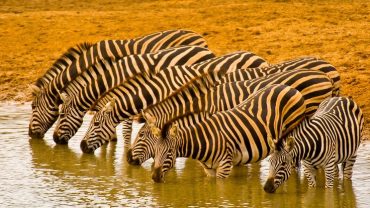
The waterholes are especially good for game viewing — many are floodlit at night in the main camps.
-
Because of its size, you have to drive more and select your routes carefully.
-
If you pick the time and place well, you can get “big sighting” moments: large herds, dramatic landscapes.
-
For a short trip, you’ll want to stay in or near one camp and focus on a localised area rather than try to do the whole park.
Checklist: What type of experience are you after?
-
Want quick access, short drive, good chance of Big Five and little travel fuss? → Go Pilanesberg.
-
Want wide open space, dramatic landscapes, special scenes at waterholes, drive longer roads? → Choose Etosha.
Accommodation & Amenities
Logistics matter a lot when your trip is short. Let’s look at how each park stacks up in terms of staying overnight, amenities, and comfort.
Pilanesberg Accommodation
-
Because of its proximity to urban centres and established tourism infrastructure, you’ll find many lodge options, self-drive friendly roads and good facilities.
-
Variety of lodges: from budget to luxury, often with game drives included.
-
Because you travel fewer hours, you’ll arrive with time to relax, go for a late afternoon drive, or rest.
-
The environment is less remote so amenities are easier to access (fuel, shops, restaurants) compared to deep wilderness.
Etosha Accommodation
-
There are camps inside the park (Okaukuejo, Halali, Namutoni) with accommodation from camping to chalets.
-
Some of the newer or more remote camps are higher end. The experience can be more “in nature”.
-
Because distances are large, staying inside the park gives you more time at game drives rather than commuting.
-
However: you need to book ahead, plan well, and accept that travel inside the park may take time.
Short Trip Consideration
-
On a short trip you’ll benefit from staying as close as possible to the park entrance or to key wildlife zones.
-
In Pilanesberg, this is easier.
-
In Etosha, staying inside the park or near a camp is the wise choice so you don’t waste time on transit.
Time of Year & Seasonal Factors
Seasonality changes the wildlife behaviour, the access, the climate and what you’ll see. Let’s compare how “Pilanesberg vs. Etosha” fare across seasons.
Pilanesberg Seasonality
-
Because South Africa has milder seasons than desert areas, the park is fairly accessible all year.
-
Wildlife viewing may be better in drier months because animals water-hole concentrate.
-
Rain can be heavy in summer (Nov-Mar) in the area; roads may be affected but rarely drastically.
Etosha Seasonality
-
In Etosha the dry season tends to be best for game viewing around waterholes (animals gather where water remains).
-
In the rainy season the salt pan may fill and the landscape changes dramatically — green growth, birds, fewer large concentrations of mammals at waterholes.
-
Some roads may be more difficult in heavy rains. Vehicles may need higher clearance.
-
On a short trip you’ll want to pick your season carefully; if you go in dry season you maximise chances of big game sightings in one area.
Implication for Short Trip
If you have limited time:
-
Pilanesberg offers more reliable access irrespective of season.
-
Etosha gives more dramatic contrasts but may also present more planning risks (roads, timing).
-
If you go to Etosha, aim for dry season and choose your camp early for best use of time.
Cost & Budget Considerations
Short trips often are tight on budget and time. Let’s compare cost factors.
Pilanesberg Budget
-
Because it’s close to major cities, travel cost (fuel/time) is lower for those based in South Africa or flying into Johannesburg.
-
Lodge options vary widely, and self-drive is a good option for shorter stays.
-
You’ll likely spend less on internal travel and logistics.
Etosha Budget
-
Because you may need to fly into Namibia (if coming internationally) or drive long distance, travel cost and time are higher.
-
Staying inside the park or near camps can be more expensive (but offers better access).
-
Vehicle hire, fuel, road conditions may add cost.
-
On a short trip you’ll get fewer “days on safari” relative to travel cost.
Cost vs. Value
-
If you value getting more “safari time” per dollar/time, Pilanesberg often delivers better value for a short trip.
-
If you value “wilderness scale” and are willing to invest more time/money for fewer days, then Etosha may be worth the extra.
Who Should Choose Which? (Pilanesberg vs. Etosha)
Let’s summarise and look at “which park is right for YOU” based on your preferences.
Choose Pilanesberg if you:
-
Only have 1–2 nights or a weekend available.
-
Are based in or near South Africa, or want minimal travel time.
-
Prefer shorter drive times and more time relaxing or in lodge.
-
Want a reliable chance of seeing the Big Five with less fuss.
-
Prefer a malaria-free, accessible park, perhaps for a family-friendly short break.
-
Want the comfort of good amenities and lodges close by.
Choose Etosha if you:
-
Have 3–4 nights (or more) and are comfortable spending a day travelling.
-
Are excited by wide open landscapes, huge salt pans, dramatic photography.
-
Want more remote safari feel and are okay with logistics and distances.
-
Are visiting Namibia or combining with other sites (so travel makes sense).
-
Are fine staying in-park and want to maximise wildlife viewing at waterholes.
-
Want a distinctive safari experience that offers scale and a different setting.
Hybrid Approach?
If your trip is very short but you still want something different, you could consider spending one night at Pilanesberg and combining that with another short stop. Or if going to Namibia already, you might do Etosha but focus on only one area and avoid trying to “do it all”.
Practical Tips for a Short Trip
Here are some practical pointers whichever you choose:
-
Book accommodation early. Lodges, especially in Etosha, fill up fast.
-
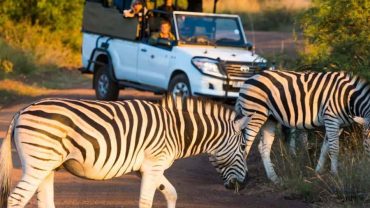
Choose self-drive or guided game drives depending on your comfort. For a short trip you might prefer guided drives to maximise sightings.
-
Arrive early / depart late. Game drives at dawn or dusk often deliver best sightings.
-
Pack right. Even in short trips you’ll want sunscreen, hat, binoculars, good camera or phone, water, insect repellent (even if malaria-free).
-
Check road and vehicle conditions. Especially in Etosha the tracks may require 4×4 or careful driving in wet season.
-
Balance travel vs. experience. Don’t spend all your time on the road. Choose a camp or lodge that saves commuting time.
-
Stay flexible. Wildlife doesn’t follow a script. Be ready for slower moments; that’s part of the charm.
-
Respect the environment and local communities. Both parks have conservation efforts and local community involvement. Enjoy the safari responsibly.
Final Thoughts – Pilanesberg vs. Etosha
When we compare Pilanesberg vs. Etosha for a short trip, the “right” answer depends a lot on your time, travel logistics, budget and type of safari you want. If your time is limited and you want less travel stress, Pilanesberg is a standout. On the other hand, if you can commit a bit more time and want a grander, more remote safari feel, Etosha delivers. Both parks are malaria-free, both offer excellent wildlife and both will reward you with amazing memories.
Comment (0)