

Camping in the Namib Desert: What to Expect in One Night
Camping in the Namib Desert is not something you rush through or treat as a simple overnight stop. It is an experience that quietly reshapes your sense of time and space. One night here can feel longer and deeper than several days elsewhere, because the desert encourages stillness rather than stimulation. The absence of noise, crowds, and artificial light allows your senses to recalibrate, tuning into the subtle rhythms of sand, wind, and sky. Choosing to camp in this ancient landscape is an invitation to slow down and experience nature on its own terms, where nothing competes for your attention and everything feels deliberate.
Entering the Namib: The Landscape Begins to Speak
As you travel toward the heart of the Namib, the world begins to open outward. Vegetation thins, colours simplify, and the horizon stretches wider with every kilometre. The dunes appear gradually, rising in sculpted waves shaped by centuries of wind. This transition is often when travelers realize that camping in the Namib Desert is not about dramatic action but about subtle shifts in perception. With Knap Tours guiding the journey, the approach is intentionally unhurried, allowing time to absorb the landscape and understand why this desert is considered one of the oldest on Earth.
Arriving at Camp: Space, Silence, and Presence
Reaching the campsite brings a noticeable shift in energy. The silence is immediate and expansive, creating a sense of calm that feels almost physical. There are no competing sounds, only the occasional breath of wind across the sand. Setting up camp becomes a grounding ritual, one that reinforces how little is truly needed for comfort. The simplicity of the environment sharpens awareness, making the act of camping feel purposeful rather than performative. In moments like these, the desert’s reputation as a place of reflection becomes entirely understandable.
Late Afternoon Light: The Dunes Transform
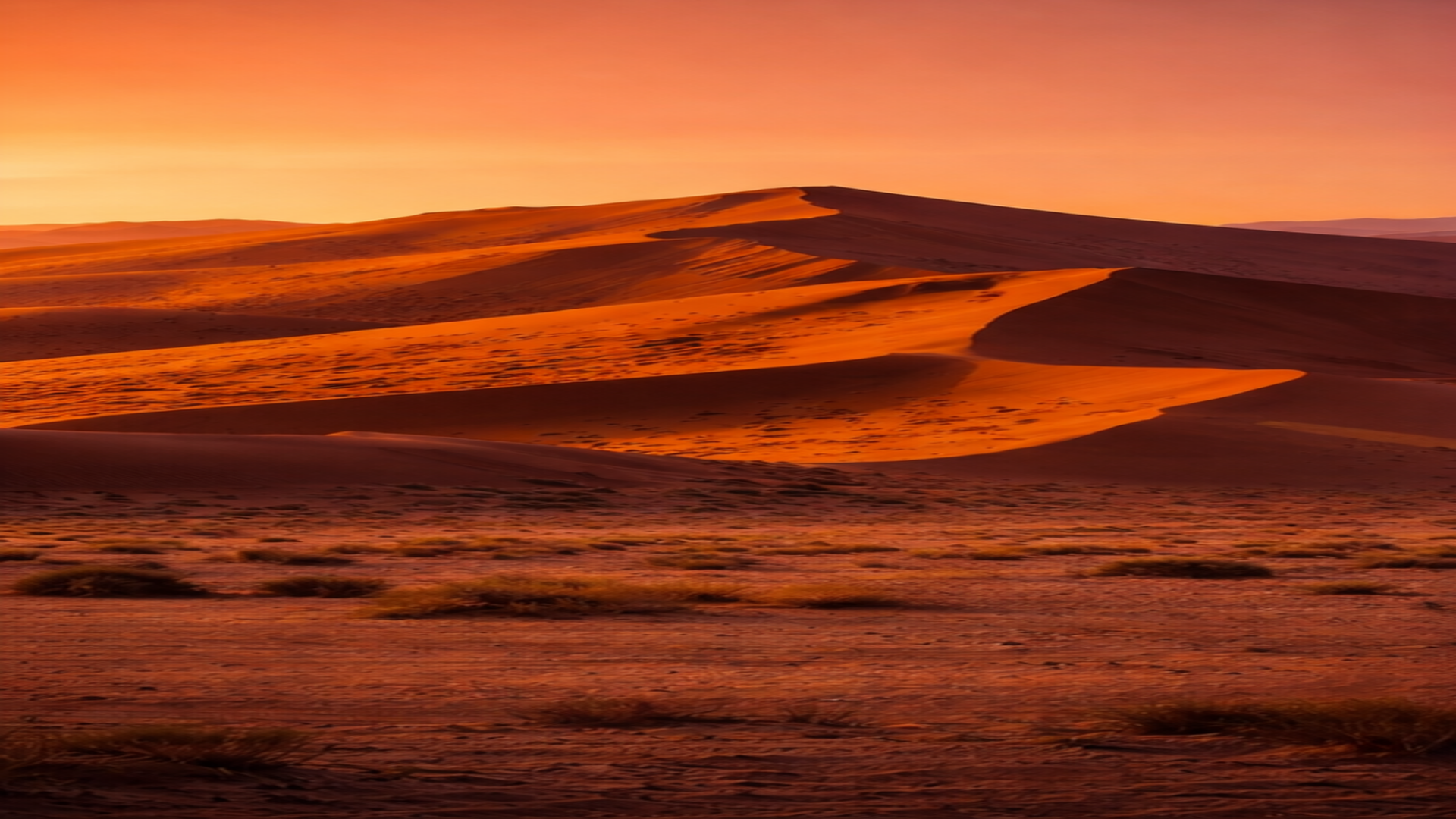 As the afternoon light softens, the Namib begins one of its most captivating transitions. Shadows lengthen across the dunes, revealing textures and ridges that seem to appear from nowhere. Colours deepen into warm reds and burnt oranges, then slowly mellow as the sun lowers. This visual transformation is one of the defining features of camping in the Namib Desert, and it is often cited by travel experts as one of the most striking desert experiences in the world. Publications such as National Geographic have long highlighted the Namib for its dramatic dune systems and ever-changing light.
Evening at Camp: Food, Warmth, and Conversation
As the sun disappears beyond the dunes, the temperature drops quickly, and the campsite settles into evening. Layers are added, lanterns glow softly, and dinner becomes a shared moment of warmth and connection. Eating in the desert feels different, perhaps because the setting strips away distraction and heightens appreciation. Conversations tend to slow and deepen, shaped by the stillness surrounding the camp. With Knap Tours facilitating the experience, there is a comfortable balance between structure and freedom, allowing guests to enjoy the evening at their own pace while feeling supported and secure.
Darkness Falls: A Sky Without Distraction
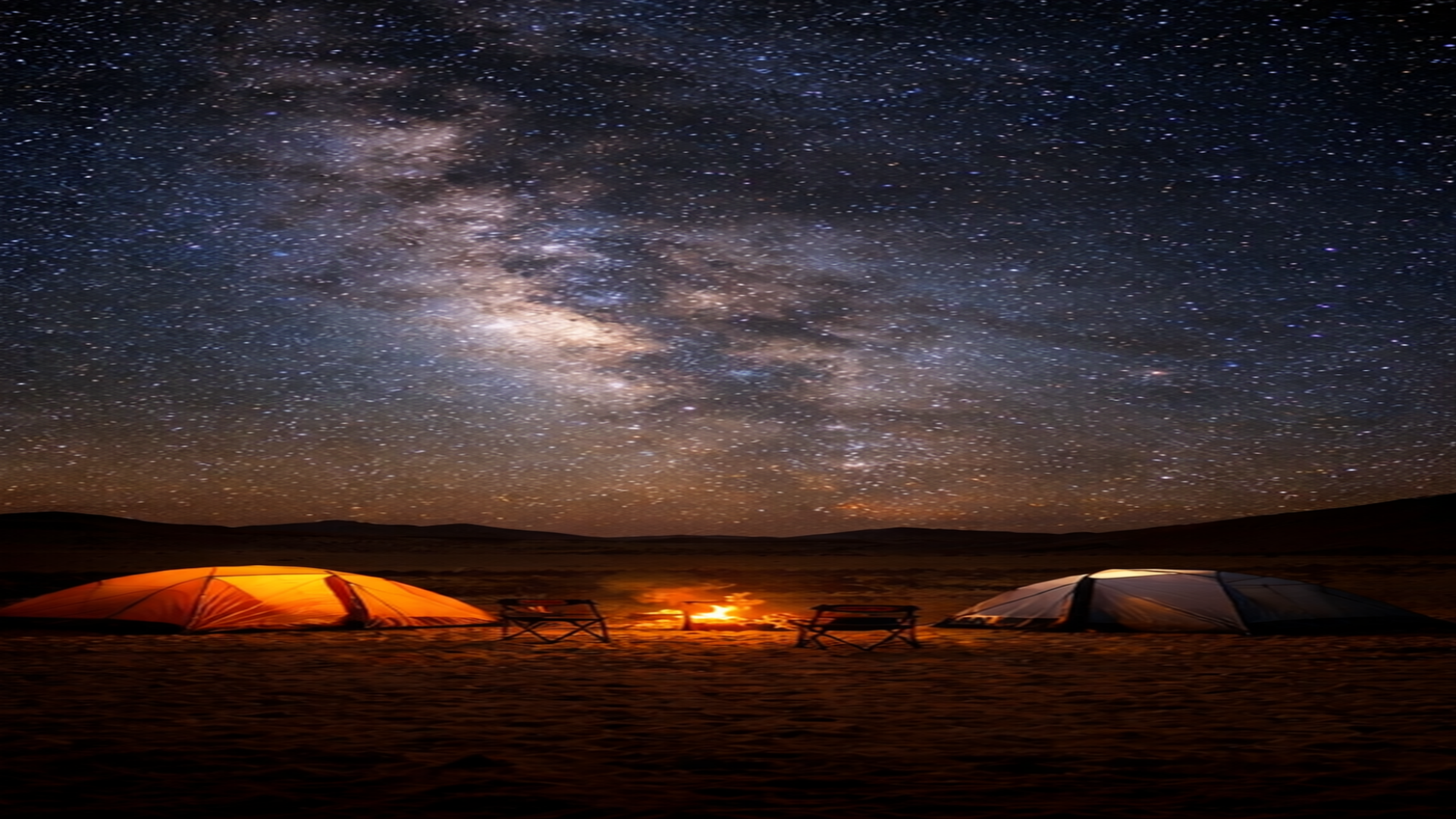 Night arrives decisively in the Namib Desert. Without light pollution, the sky reveals itself in astonishing clarity. Stars appear in vast numbers, stretching from horizon to horizon, while the Milky Way forms a luminous arc overhead. Camping in the Namib Desert offers some of the best natural stargazing conditions on the planet, a fact supported by the International Dark-Sky Association, which explains why remote desert regions are ideal for observing the night sky.
Standing beneath this sky often inspires a sense of humility. The scale of the universe becomes tangible, and the usual concerns of daily life feel distant and small.
The Sounds of the Desert at Night
Although the desert appears silent during the day, night reveals its subtle soundtrack. You may hear the faint movement of sand, distant nocturnal birds, or small animals navigating the dunes. These sounds are never intrusive, but they remind you that the desert is very much alive. Camping here encourages a different kind of listening, one that values nuance over volume. This awareness deepens the sense of connection to the environment and reinforces the feeling of being a respectful guest rather than a spectator.
Sleeping in the Namib: Rest Shaped by Nature
Sleep in the desert often feels unusually restorative. The cool night air, combined with physical activity and the absence of artificial noise, allows the body to relax fully. Some travelers drift off quickly, while others remain awake a little longer, listening to the desert breathe around them. Either way, rest comes naturally. Camping in the Namib Desert offers a rare opportunity to experience sleep that is uninterrupted by modern distractions, creating a sense of renewal that lingers into the following day.
Before Dawn: The Coldest, Quietest Moment
The hours before sunrise are the most still. The air is cool, the sky deep and dark, and the desert seems suspended in anticipation. This is a moment few people ever experience, yet it is one of the most powerful parts of overnight camping. Thoughts slow, reflections surface effortlessly, and time feels almost irrelevant. Being awake during this hour creates an intimate connection with the landscape, one that feels deeply personal and quietly profound.
Sunrise Over the Dunes: A Gentle Awakening
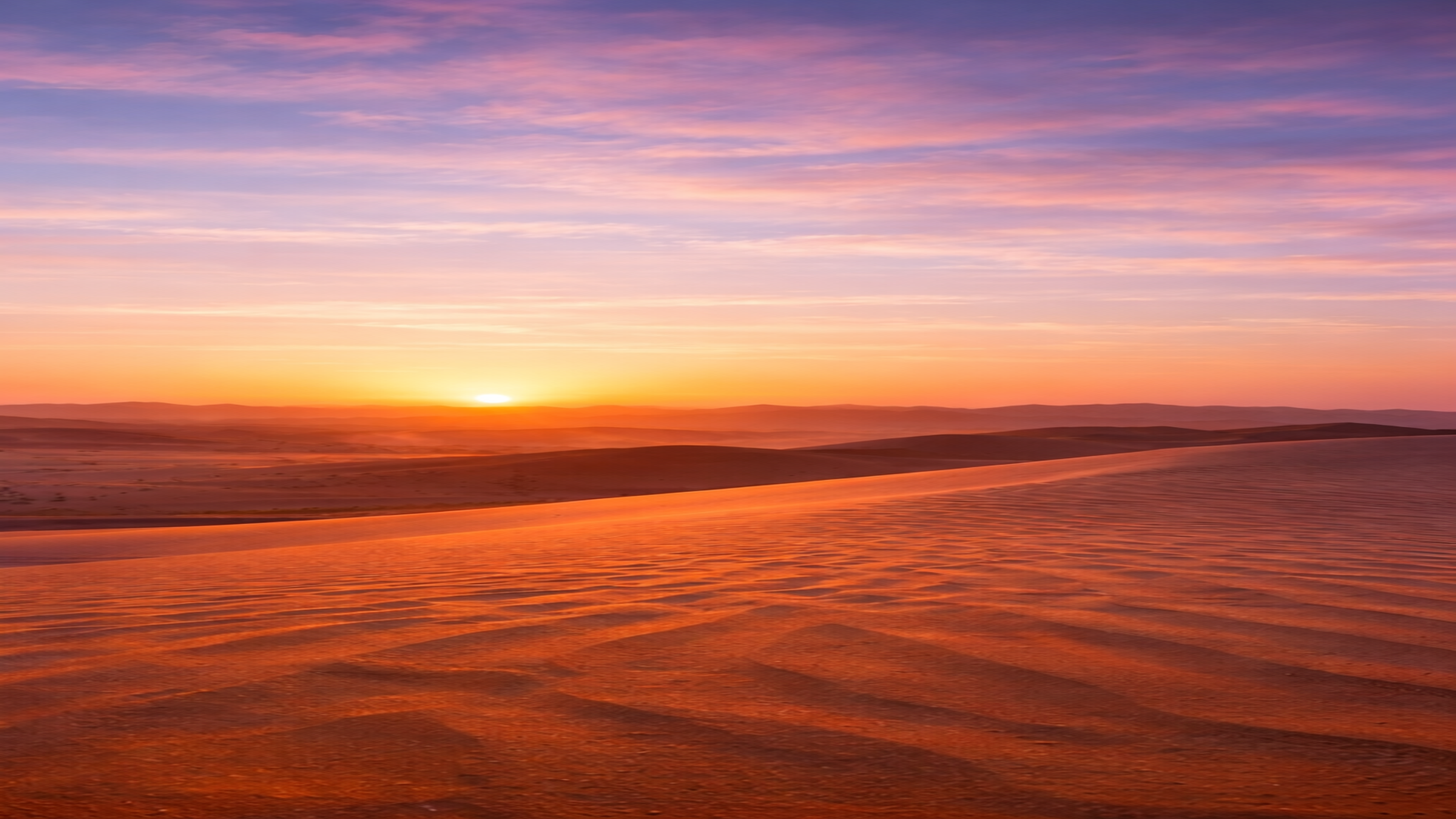 As dawn breaks, light returns gradually to the desert. Soft pinks and pale golds brush across the dunes, warming the sand and restoring colour to the landscape. Sunrise in the Namib is less dramatic than sunset but equally moving in its calmness. With a warm drink in hand, watching the desert awaken feels like a closing chapter to the night’s story. The Namibia Tourism Board often highlights sunrise moments as a defining feature of desert travel.
Breaking Camp: Leaving Lightly
Packing up camp is done carefully and with intention. Everything is removed, leaving the landscape unchanged. This reinforces the importance of responsible travel and respect for fragile desert ecosystems. Camping in the Namib Desert teaches that how you leave matters just as much as how you arrive. The wind soon erases footprints, restoring the dunes to their timeless state.
Why One Night Is Enough
Many travelers are surprised by how impactful a single night can be. Camping in the Namib Desert does not rely on duration but on depth. One night is enough to slow your thoughts, sharpen your senses, and create memories rooted in feeling rather than activity. Experiencing this with Knap Tours ensures the focus remains on connection, safety, and meaningful engagement with the landscape rather than logistics or hurry.
Conclusion: Carrying the Desert Forward
A night spent camping in the Namib Desert leaves a quiet imprint. Long after the journey continues, the memory of the stars, the silence, and the shifting light tends to resurface unexpectedly. This is the mark of meaningful travel. Through thoughtful guidance and deep respect for place, Knap Tours offers an overnight desert experience that transforms one night into a lasting perspective, carried far beyond the dunes.

Comment (0)